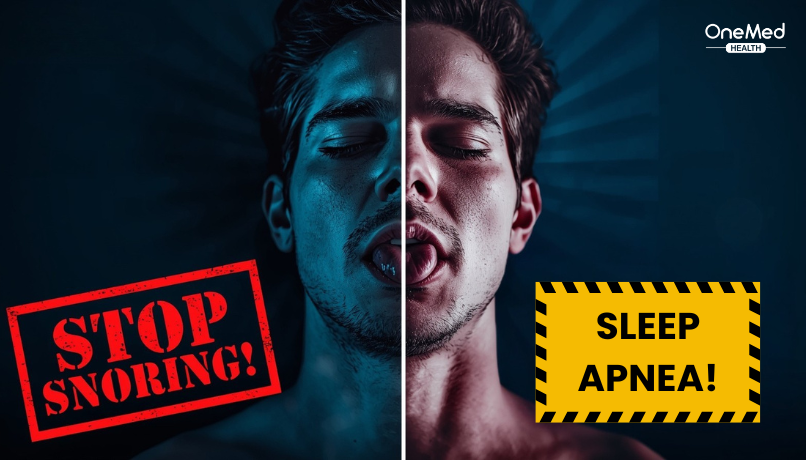
You go to bed thinking you slept all night, but you still wake up exhausted.
Your partner says you snore, choke, or stop breathing for a few seconds, and you spend the day fighting to stay awake.
If that sounds familiar, you’re not lazy, and it’s not just snoring, it might be sleep apnea.
The good news? While your main treatment (like CPAP or an oral device) does the heavy lifting, simple breathing exercises can support it. In this blog, we’ll walk through easy, real-world exercises you can start using to calm your body, train better breathing habits, and make your nights and days a little easier.
What Is Sleep Apnea?
Sleep apnea is a sleep problem where your breathing keeps stopping and starting while you sleep.
You may snore, make choking sounds, or stop breathing for a few seconds many times in the night. Often, the person who notices this first is a partner or family member.
Because your breathing is not steady, your body may not get enough oxygen. Your brain then wakes you up for a moment so you can start breathing again. You may not remember waking up, but your sleep becomes broken and poor in quality.
According to theNational Heart, Lung, and Blood Institute, sleep apnea is a common condition where breathing stops and restarts many times during sleep, which can prevent your body from getting enough oxygen.
Why Sleep Apnea Is Serious?
Sleep apnea is not just loud snoring or “bad sleep.” It is a health problem where your breathing stops again and again during the night, which strains your heart, brain, and blood vessels over time. This is why doctors and health groups strongly advise getting checked if you or your family notice pauses in breathing, loud snoring, or heavy daytime tiredness.
1. It stresses your heart
When your breathing stops, your oxygen drops, and your blood pressure jumps. Over time, this puts a lot of strain on your heart.
2. It can lead to stroke and other diseases
Sleep apnea is linked to high blood pressure, stroke, heart disease, and diabetes if it is not treated.
3. It ruins your sleep
Your sleep is broken all night by short wake-ups. You may spend hours in bed, but still wake up tired.
4. It causes daytime sleepiness
Poor sleep makes you sleepy in the day, affects focus and memory, and can make you feel moody or irritated.
5. It raises accident risk
Feeling sleepy while driving or working increases the chance of car crashes and work accidents.
6. It lowers the quality of life
Low energy, poor mood, and snoring problems can affect your work, social life, and relationships.
The good news is its treatable, with proper medical help and treatment, many people sleep better, feel more energetic, and lower their health risks.
Can Breathing Exercises Really Help Sleep Apnea?
Breathing and mouth-throat exercises can help, but they are not a magic cure on their own. Think of them as extra support for your airway, not a full replacement for medical treatment.
Some special “mouth and throat” routines (often called myofunctional therapy) are designed to strengthen the tongue, throat, and face muscles so they are less likely to relax and block your airway during sleep. A review of myofunctional therapy for obstructive sleep apnea found that these exercises can improve tongue position, nasal breathing, and muscle tone, and may reduce snoring and apnea severity in some people.
These programs often also teach you to breathe through your nose instead of your mouth, which helps keep the airway more stable and can support better sleep.
On top of that, diaphragmatic (belly) breathing trains the main breathing muscle (the diaphragm) and encourages slow, deep breaths. The Cleveland Clinic’s guide to diaphragmatic breathing explains that this type of breathing can improve relaxation, increase oxygen in the blood, and lower heart rate and blood pressure, which may help you feel calmer at night.
Breathing and muscle exercises may reduce snoring and improve symptoms, especially in mild to moderate cases, but they do not usually replace CPAP or other treatments that a sleep doctor prescribes for moderate or severe sleep apnea. They work best as a partner to medical care, not a substitute.
Who Should Talk to a Doctor Before Trying These?
Most people can safely do gentle breathing exercises.
But some people must be extra careful and talk to a doctor first, especially if they already have health problems or moderate–severe sleep apnea.
People who should talk to a doctor first
- People with moderate or severe sleep apnea
If a sleep study has shown you have moderate or severe OSA, you should not change your treatment plan on your own. - People with heart disease
If you have any heart problem (like past heart attack, heart failure, irregular heartbeat), you should get medical advice before starting new breathing routines. - People with serious lung disease
Conditions such as COPD, severe asthma, or other lung diseases need special care and guidance from a doctor. - People with uncontrolled high blood pressure
If your blood pressure is often very high or not well controlled with medicine, talk to your doctor first. - People who get chest pain, fainting, or strong dizziness
If you ever feel chest pain, pass out, or get very dizzy, you need medical care, not just home exercises.
How to Practice Breathing Exercises Properly
The best time to do these exercises is when you are fully awake, not sleepy, such as in the morning and in the evening. Do not do them while driving or doing any task where you need full attention and quick reactions.
Try to practice in a quiet, comfortable place where you can sit or lie down safely. Put your phone on silent or keep it away from you so you are not disturbed. This helps your body and mind relax and focus on your breathing.
At first, start with about 5–10 minutes a day. As it feels easier, you can slowly increase to around 10–15 minutes a day. Many research programs that tested mouth and throat exercises for sleep apnea used short daily sessions over several weeks, rather than long, one-time workouts.
Keep a patient mindset. You are training your muscles and breathing habits, not looking for instant magic after one session. Small, regular practice over weeks is much more helpful than doing a lot only once in a while.
Core Breathing Exercises for Sleep Apnea
Breathing exercises do not replace your main sleep apnea treatment, but they can support it. They help your body relax and train better breathing habits over time, which may make your sleep feel calmer and more comfortable.
Below are some simple types of breathing exercises you can try.
1. Diaphragmatic (Belly) Breathing
Diaphragmatic (Belly) Breathing helps you breathe deep into your belly instead of taking fast, shallow chest breaths. It can calm your body and support smoother breathing.
How to do it:
- Sit or lie in a comfortable position.
- Place one hand on your chest and one on your belly.
- Breathe in slowly through your nose so your belly rises and your chest stays mostly still.
- Breathe out slowly through your mouth.
- Start with 5–10 slow breaths, 2–3 times a day.
2. Pursed-Lip Breathing
This exercise slows your breathing and helps air move out more smoothly, which can be useful when you feel short of breath or tense.
How to do it:
- Breathe in gently through your nose for about 2–3 seconds.
- Purse your lips as if you are going to whistle.
- Breathe out slowly through the small opening for about 4–6 seconds.
- Use it when you feel breathless or anxious before sleep.
3. Gentle Paced Breathing for Relaxation
This exercise is mainly for relaxation. It does not fix sleep apnea, but it can help your body and mind wind down before bed.
How to do it (adjust the counts if needed):
- Breathe in through your nose for about 4 seconds.
- Hold your breath for up to 4–7 seconds only if it feels comfortable.
- Breathe out slowly for about 6–8 seconds.
- Repeat for a few minutes, keeping the breath soft and easy.
- People with heart or lung problems should avoid long breath holds and speak with a doctor first.
4. Tongue Posture & Tongue-Suction Exercise
This exercise trains your tongue to rest against the roof of your mouth instead of falling back toward your throat.
- Press your tongue flat against the roof of your mouth.
- Gently “suction” it up and hold for a few seconds.
- Relax and repeat several times in a row.
- Try to keep your tongue touching the roof of your mouth during the day when your mouth is closed.
5. Soft Palate “Ahh” and Singing Sounds
These exercises work the soft area at the back of your mouth and throat.
- Open your mouth and make clear sounds like “ahh,” “eee,” and “ooo.”
- Say or sing these sounds a bit louder than normal for several seconds.
- Repeat them in short sets, moving your mouth in an exaggerated way.
- You can also sing simple vowel sounds slowly and clearly.
6. Cheek, Lip & Jaw Resistance Exercises
These moves help your lips stay closed, strengthen your cheeks, and improve jaw control, all of which can support better nasal breathing.
- Hold a clean flat object (like a tongue depressor or spoon handle) between your lips and gently resist while you pull on it.
- Puff your cheeks with air and press lightly on them with your fingers while trying to keep the air in.
- Repeat these moves in short sets each day.
Conclusion
If you’ve made it this far, you already know sleep apnea is not “just snoring” or something to ignore until it gets worse. It affects your energy, your mood, your focus, and over time, even your heart and overall health. The aim is not to scare you, but to remind you that your sleep really does matter.
Breathing exercises and mouth–throat exercises won’t magically cure sleep apnea, but they can be a helpful add-on. They can help you relax before bed, support better breathing habits, and, over time, may make your nights feel a little calmer and your mornings a little easier. Think of them as training for your airway muscles, working alongside your main treatment, not replacing it.
If you recognise yourself in the signs we talked about, or you already use a CPAP or oral device, the next smart step is to talk to your doctor or sleep specialist about adding these exercises to your routine. Start slowly, listen to your body, and stop if anything feels wrong. Small, steady changes can make a big difference over time, and you deserve sleep that actually leaves you feeling rested.
